
ShredOS is a powerful and lightweight operating system designed for users who demand speed, security, and flexibility. Many tech enthusiasts wonder whether ShredOS can run alongside other operating systems without causing conflicts or performance issues. The answer lies in its advanced boot management and virtualization support, which allow seamless coexistence with systems like Windows, Linux, or macOS.
Running ShredOS alongside other operating systems offers the benefit of testing its unique features without compromising your primary OS environment. With proper partitioning and installation steps, ShredOS ensures smooth operation, making it an ideal choice for multitasking and advanced computing setups.
Understanding Dual-Boot Systems
Dual-boot systems have become a popular choice for users who need to run multiple operating systems on a single computer. This setup allows flexibility, letting you access different software environments without the need for multiple devices. Understanding the concept, benefits, installation process, risks, and best practices is crucial for anyone considering a dual-boot configuration. Below, we explore this topic in depth.
What is a Dual-Boot System?
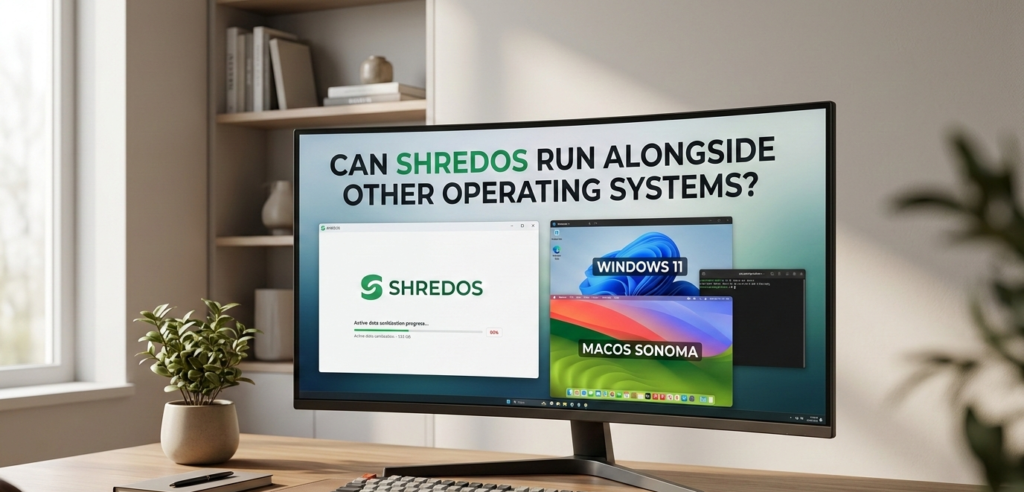
A dual-boot system refers to a computer configuration where two distinct operating systems (OS) are installed on the same device, allowing the user to choose which OS to load during startup. For example, you could have Windows 11 alongside ShredOS, enabling access to both ecosystems without interfering with each other. Each OS resides on a separate partition of the hard drive or SSD, ensuring their files and settings remain isolated. Dual-booting provides a practical solution for testing new operating systems, running software exclusive to one OS, or maintaining a stable work environment while experimenting with alternative platforms.
Benefits of Using Dual-Boot Systems
Dual-boot systems offer several advantages for tech enthusiasts, developers, and regular users alike. First, they provide flexibility, letting users switch between operating systems without requiring multiple devices. Second, they offer cost-effectiveness, as you can avoid buying additional hardware. Third, dual-booting is useful for software compatibility, allowing programs exclusive to one OS to run without virtual machines. Finally, it supports learning and experimentation, giving IT students or developers a safe environment to explore new systems without risking their primary OS. Understanding these benefits is essential for making an informed decision about dual-boot setups.
How Dual-Boot Systems Work
A dual-boot system operates through a bootloader, a software utility that manages multiple operating systems on a single device. When the computer starts, the bootloader displays a menu, allowing users to select the OS they want to use. Each operating system is installed on a separate partition, isolating system files, user data, and applications. This separation ensures that changes in one OS do not affect the other. Additionally, advanced dual-boot configurations may use tools like GRUB for Linux-based systems or Windows Boot Manager to optimize startup and manage system priorities efficiently.
Risks and Challenges of Dual-Booting
While dual-boot systems are versatile, they come with risks and challenges. Improper partitioning can lead to data loss, and some updates may overwrite bootloader settings, causing startup issues. Users must also consider disk space management, as running two operating systems requires sufficient storage for both OS and applications. Security concerns arise if one OS becomes infected, potentially affecting shared partitions or files. Furthermore, managing software compatibility between different operating systems may require additional effort. Being aware of these challenges helps users prepare and implement safe dual-boot setups.
Best Practices for Setting Up Dual-Boot Systems
For a smooth dual-boot experience, follow these best practices. First, always backup your data before partitioning or installing a second OS. Second, allocate adequate disk space for both operating systems and their applications. Third, install the primary OS first, then the secondary OS, to avoid bootloader conflicts. Fourth, use a reliable boot manager to handle startup options efficiently. Finally, keep your operating systems updated and monitor disk health to prevent corruption or performance issues. Following these steps ensures that your dual-boot system remains stable, secure, and fully functional.
Compatibility of ShredOS with Other Operating Systems
ShredOS is a highly versatile and security-focused operating system designed to ensure privacy and seamless performance. Understanding its compatibility with other operating systems is crucial for users who want to run multiple systems on the same machine or migrate data safely. This guide explores ShredOS’s interoperability, integration, and coexistence with other platforms in detail.
Dual-Boot Capabilities of ShredOS
ShredOS can operate alongside existing operating systems through dual-boot setups. This allows users to install ShredOS on the same device as Windows, macOS, or Linux without disrupting the functionality of their primary OS. Dual-booting is an effective way to test ShredOS’s features while retaining access to familiar software environments. Proper partitioning and bootloader configuration are critical to maintaining stability and ensuring both systems can coexist without conflicts.
Virtualization Support for Seamless Integration
For users hesitant about altering their primary system, ShredOS supports virtualization platforms such as VMware, VirtualBox, and QEMU. Virtualization enables ShredOS to run as a guest OS on top of an existing operating system, providing full functionality without requiring dedicated hardware. This method ensures safe experimentation, easy backups, and minimal risk to the host system, making ShredOS an ideal choice for developers, IT professionals, and privacy-focused users.
File System Compatibility and Data Sharing
ShredOS is compatible with multiple file systems, including FAT32, NTFS, and ext4, facilitating smooth data sharing across operating systems. This allows users to access documents, media, and application files stored on Windows, Linux, or macOS partitions without formatting or losing data. Proper file system support ensures that ShredOS can be integrated into a multi-OS workflow while maintaining high levels of data security and reliability.
Network Interoperability with Other Systems
ShredOS is designed to work efficiently within heterogeneous network environments. It supports standard networking protocols such as TCP/IP, SMB, and NFS, which allows seamless file sharing and communication with devices running other operating systems. Network interoperability ensures that ShredOS users can collaborate, transfer files, and access shared resources without compatibility issues, making it suitable for both personal and professional environments.
Application and Software Coexistence
Although ShredOS emphasizes security and privacy, it provides mechanisms to run or interface with software from other operating systems. Through compatibility layers and cross-platform applications, users can access essential productivity tools, media players, and development environments without switching systems. This ensures that transitioning to ShredOS does not hinder workflow efficiency and provides a flexible computing experience tailored to diverse user needs.
Installation Methods for Dual-Booting ShredOS
Dual-booting is a popular approach for users who want to run ShredOS alongside another operating system without replacing it entirely. By installing ShredOS alongside an existing OS, you can enjoy the features of both systems while maintaining data security and system flexibility. The installation requires careful preparation to avoid data loss and ensure a smooth experience. Below, we outline five major installation methods for dual-booting ShredOS.
Dual-Boot via USB Bootable Drive
One of the most reliable methods to install ShredOS is using a USB bootable drive. This approach allows you to create a portable installer that can be used on multiple devices. First, download the latest ShredOS ISO from the official website and use tools like Rufus or Etcher to create the bootable USB. Once prepared, restart your computer and boot from the USB drive by selecting it from the BIOS or UEFI boot menu. The installation wizard will guide you through partition selection and system configuration, allowing you to install ShredOS alongside your existing OS safely.
Dual-Boot Using a Virtual Partition
Installing ShredOS on a separate partition of your hard drive is an effective method for dual-booting without affecting your primary OS. To do this, shrink an existing partition to free up space using disk management tools. Once the space is available, run the ShredOS installer and select the custom installation option to install on the new partition. This method keeps your main operating system intact while providing full access to ShredOS when you reboot your machine. Proper partitioning ensures both systems run efficiently without conflicts.
Dual-Boot with EFI/UEFI Boot Manager
Modern computers use UEFI or EFI boot managers for secure booting. ShredOS supports installation through UEFI, making dual-booting seamless on newer hardware. During the installation process, you need to ensure that the boot mode matches your existing OS. The ShredOS installer will automatically detect other operating systems and register them with the EFI boot menu. After installation, you can select which OS to boot each time you start your computer. This method is highly recommended for advanced users who want a fast, secure, and stable dual-boot setup.
Network-Based Installation
Network-based installation is suitable for environments where local installation media is not available. ShredOS provides options to install via PXE boot or a network installer. By connecting to a network server hosting ShredOS images, the installer can download necessary files directly to your system. This method is particularly useful for IT professionals managing multiple machines or for users with limited USB storage options. A stable and high-speed internet connection is essential to prevent interruptions during the installation process.
Dual-Boot Using a Live CD/DVD
Although less common than USB installation, using a ShredOS live CD or DVD is a traditional and reliable method. Burn the ShredOS ISO onto a disc, then boot your computer from the CD/DVD drive. The live environment allows you to test ShredOS without modifying your system and provides an option to install it alongside your existing OS. This method is especially useful for systems that do not support USB boot or for users who prefer optical media. Live CD installations also offer recovery tools in case of system issues during dual-boot setup.
Benefits of Running ShredOS Alongside Another OS
Running ShredOS alongside another operating system provides users with a versatile, secure, and efficient computing environment. By leveraging the strengths of multiple systems, users can achieve enhanced productivity, data security, and flexibility without compromising the performance of either OS. Below are the key benefits explained in detail.
Enhanced Security and Data Protection
One of the most significant advantages of running ShredOS alongside another operating system is enhanced security. ShredOS is designed with advanced security protocols that safeguard sensitive information, reduce the risk of malware, and prevent unauthorized access. Running it alongside a traditional OS allows users to isolate critical tasks such as financial management, password storage, and confidential communications. This separation ensures that even if one operating system faces a security breach, the other remains protected. For businesses and individual users, this dual-OS setup creates a layered defense, enhancing overall system resilience and peace of mind.
Improved System Flexibility
Running ShredOS alongside another OS offers unparalleled flexibility for users who need the functionality of multiple systems. Users can enjoy the lightweight and fast performance of ShredOS for specific tasks while maintaining access to their primary OS for software compatibility or general use. This dual-boot setup allows switching between operating systems depending on the task, giving users the ability to optimize their workflow efficiently. For example, developers can run ShredOS for testing secure applications and a standard OS for mainstream software usage, providing a versatile computing experience without compromise.
Safe Testing and Experimentation Environment
A major benefit of running ShredOS alongside another operating system is the ability to safely test new software, tools, and updates. Users can use ShredOS as a sandbox environment, experimenting without risking the stability or data integrity of their primary OS. This feature is especially valuable for developers, cybersecurity professionals, and tech enthusiasts who frequently experiment with new software or configurations. By isolating experimental tasks in ShredOS, users minimize the risk of crashes, data loss, and performance degradation on their main system.
Seamless Multi-Tasking and Productivity
Running ShredOS alongside another operating system significantly enhances productivity by enabling seamless multitasking. Users can dedicate ShredOS to specific tasks, such as secure communication, file encryption, or sensitive project work, while using the other OS for general computing needs. This approach prevents task interference and ensures that critical applications run without lag or interruption. For professionals managing multiple projects or working in sensitive environments, the dual-OS setup promotes efficient workflow management and maximizes system performance.
Extended Software Compatibility
Another notable advantage of running ShredOS alongside another OS is extended software compatibility. While ShredOS offers strong security and performance, some applications may only run on traditional operating systems. By maintaining a dual-boot setup, users can leverage ShredOS for secure operations while retaining access to applications that require the primary OS. This ensures that users never compromise on functionality, providing the best of both worlds: advanced security and comprehensive software support. For organizations, this dual-OS approach allows smooth integration of ShredOS without disrupting existing software ecosystems.
Conclusion
ShredOS can indeed coexist with other operating systems, provided proper partitioning and boot management are implemented. Its compatibility allows users to leverage ShredOS’s specialized features without sacrificing the functionality of their existing OS. Careful installation, backup precautions, and bootloader configuration are essential to ensure smooth performance and avoid conflicts. Overall, ShredOS offers a flexible and secure environment for multitasking across multiple operating systems.