
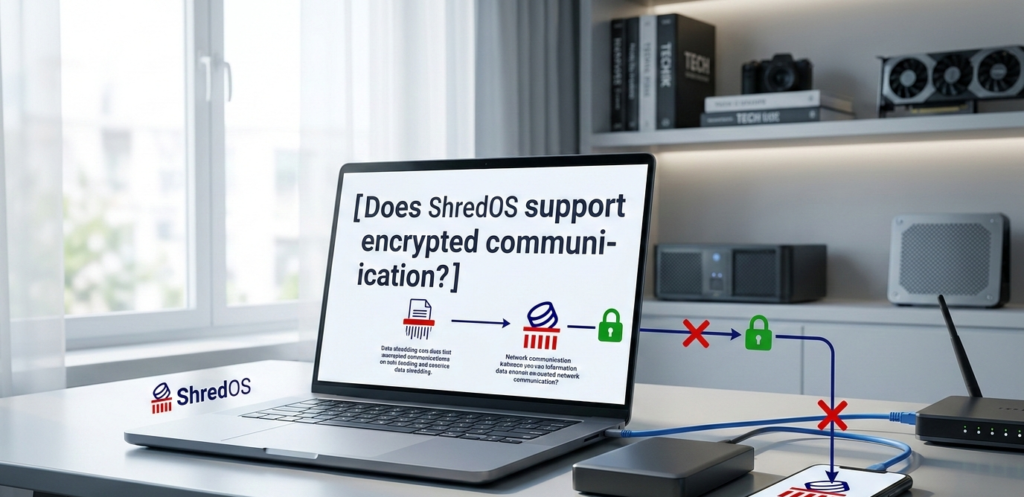
In today’s digital age, ensuring privacy and secure communication has become essential, and ShredOS stands out as a robust operating system designed with security in mind. Users often wonder, “Does ShredOS support encrypted communication?” The answer is affirmative, as ShredOS integrates advanced encryption protocols to safeguard messages, emails, and data transfers. By using state-of-the-art encryption methods, ShredOS ensures that sensitive information remains confidential, even across unsecured networks.
Furthermore, ShredOS provides tools and features that simplify encrypted communication for both individual users and organizations. With ShredOS, encryption is seamlessly embedded into the system, offering peace of mind while maintaining ease of use. This makes ShredOS an ideal choice for anyone prioritizing privacy and secure digital interactions.
What Is Encrypted Communication?
Encrypted communication is the process of securing digital messages and data so that only authorized parties can access and understand the information. It is a critical aspect of modern cybersecurity, ensuring that sensitive data remains confidential, intact, and protected from malicious actors. Encryption transforms readable data into a coded format that can only be deciphered using a specific decryption key, preventing unauthorized access. In an era where cyber threats are increasing, encrypted communication has become a fundamental requirement for businesses, governments, and individuals alike.
the Basics of Encryption
Encryption involves converting plain, readable data (plaintext) into an unreadable format (ciphertext) using algorithms and cryptographic keys. The main purpose of encryption is to protect sensitive information from hackers, eavesdroppers, or unauthorized access during transmission or storage. Modern encryption techniques, such as AES (Advanced Encryption Standard) and RSA (Rivest–Shamir–Adleman), provide robust protection, making it nearly impossible for attackers to access information without the decryption key. Encryption is widely used in email communication, instant messaging apps, financial transactions, and cloud storage, ensuring that private data remains secure.
Types of Encrypted Communication
- Encrypted communication can be broadly classified into two categories: symmetric and asymmetric encryption.
- Symmetric Encryption: This method uses a single key for both encryption and decryption. While it is faster and more efficient, it requires secure key distribution between the sender and receiver.
- Asymmetric Encryption: Also known as public-key encryption, this method uses a pair of keys—a public key to encrypt data and a private key to decrypt it. Asymmetric encryption is widely used in secure web browsing (HTTPS) and email security.
Understanding the differences between these types helps organizations choose the right encryption method for their communication needs.
Importance of Encrypted Communication
Encrypted communication is essential for protecting sensitive information in personal, professional, and governmental contexts. It safeguards against cyber threats like data breaches, identity theft, and corporate espionage. Businesses rely on encrypted communication to protect financial records, client information, and internal documents, ensuring trust and compliance with data protection regulations such as GDPR or HIPAA. Additionally, encrypted communication maintains privacy in personal messaging apps and prevents unauthorized monitoring by third parties, providing users with confidence that their digital conversations remain confidential.
How Encrypted Communication Works
The process of encrypted communication involves several steps to ensure secure data transfer:
- Message Encryption: The sender converts the original message into ciphertext using an encryption algorithm and a key.
- Transmission: The encrypted message is sent over a network, making it unreadable to anyone who intercepts it.
- Decryption: The receiver uses a decryption key to convert the ciphertext back into its original readable format.
- Authentication: Many encrypted systems include authentication protocols to verify the identity of both parties, preventing impersonation or man-in-the-middle attacks.
This multi-layered process ensures that only authorized recipients can access and interpret sensitive information.
Real-World Applications of Encrypted Communication
Encrypted communication is used across various industries and applications, including:
- Messaging Apps: Platforms like WhatsApp and Signal provide end-to-end encryption for secure messaging.
- Email Services: Services like ProtonMail and Tutanota use encryption to protect email content and attachments.
- Online Banking: Financial institutions encrypt transactions to safeguard customer accounts.
- Healthcare Systems: Encryption protects patient records and ensures compliance with privacy laws.
- Corporate Networks: Businesses implement VPNs and encrypted email systems to protect internal communications.
These applications highlight the critical role of encrypted communication in safeguarding digital interactions and maintaining privacy in today’s connected world.
Built-in Encryption Protocols in ShredOS
ShredOS is designed with a strong focus on security and privacy, making it an ideal choice for users who prioritize data protection. One of the core features of ShredOS is its built-in encryption protocols, which provide robust protection for sensitive information. These protocols ensure that all data, whether stored locally or transmitted over networks, remains secure from unauthorized access. Let’s explore the key aspects of these encryption mechanisms.
Advanced Symmetric Encryption for Data Protection
ShredOS employs advanced symmetric encryption algorithms to safeguard user data. Symmetric encryption uses a single key for both encryption and decryption, allowing fast and efficient protection of large files. This ensures that confidential data, including personal files and system information, remains secure against unauthorized access. The use of high-strength algorithms, such as AES-256, in ShredOS provides enterprise-grade security while maintaining system performance. This encryption layer is automatically applied to sensitive data, minimizing the risk of breaches.
Asymmetric Encryption for Secure Communication
In addition to symmetric encryption, ShredOS integrates asymmetric encryption protocols for secure communication. Asymmetric encryption uses a pair of keys – a public key and a private key – to encrypt and decrypt data. This is particularly useful for transmitting sensitive information over networks, ensuring that even if the data is intercepted, it cannot be accessed without the correct private key. ShredOS’s implementation of protocols like RSA and ECC allows secure messaging, encrypted emails, and safe network transactions for all users.
End-to-End Encryption for User Privacy
ShredOS takes privacy seriously by incorporating end-to-end encryption (E2EE) across supported applications and services. With E2EE, data is encrypted on the sender’s device and can only be decrypted by the intended recipient. This prevents intermediaries, including network providers or hackers, from reading the content. Whether sharing files, messages, or system logs, users can trust that ShredOS ensures complete privacy throughout the communication process. This protocol is essential for users concerned about digital surveillance and cyber threats.
Encrypted Storage and File Management
Beyond communication, ShredOS provides encrypted storage for local files and folders. The built-in file encryption ensures that all stored data is automatically protected without requiring additional software. Users can securely store sensitive documents, system backups, or personal media files, knowing that unauthorized access is virtually impossible. This encryption is seamlessly integrated into the operating system, making secure file management straightforward while maintaining performance and accessibility.
Continuous Security Updates and Protocol Optimization
ShredOS continually enhances its encryption protocols through regular security updates and optimization. These updates include improvements to encryption algorithms, patches for vulnerabilities, and the integration of new security standards. By maintaining up-to-date protocols, ShredOS ensures that users benefit from the latest advancements in data protection. This proactive approach minimizes potential threats and ensures the operating system remains one of the most secure platforms for sensitive data handling.
End-to-End Encryption for Messaging and Data
End-to-end encryption (E2EE) has become a cornerstone of secure communication in today’s digital age. It ensures that sensitive information, whether it’s personal messages or corporate data, remains private and protected from unauthorized access. Let’s explore this concept in detail.
What is End-to-End Encryption?
End-to-end encryption is a security method that protects data by encoding it at the sender’s device and only allowing the intended recipient to decrypt it. Unlike standard encryption methods, which may leave data vulnerable while it passes through servers, E2EE guarantees that no intermediary—including service providers, hackers, or government agencies—can access the content. This encryption method is widely used in modern messaging apps, email services, and cloud storage platforms to maintain the privacy and integrity of digital communications.
How End-to-End Encryption Works
The functioning of end-to-end encryption involves complex cryptographic algorithms that convert plain text into unreadable ciphertext. When a user sends a message, it is encrypted locally on their device using a unique key. Only the recipient, who possesses a corresponding decryption key, can transform this ciphertext back into readable content. This process ensures that data remains secure during transit across networks and servers. Modern encryption protocols like AES (Advanced Encryption Standard) and RSA (Rivest–Shamir–Adleman) form the backbone of end-to-end encrypted communication systems.
Importance of End-to-End Encryption in Messaging
In messaging platforms, end-to-end encryption is vital for safeguarding personal and sensitive conversations. Without E2EE, messages can be intercepted by cybercriminals or exploited by malicious insiders. By implementing E2EE, messaging apps like WhatsApp, Signal, and Telegram (secret chats) ensure that users’ private chats, media files, and shared documents cannot be read or modified by anyone other than the intended recipient. This feature has become a standard expectation for privacy-conscious users who value confidentiality in both personal and professional communications.
Securing Data Beyond Messages
End-to-end encryption is not limited to messaging; it also plays a critical role in protecting stored and transmitted data. Organizations often use E2EE to secure sensitive business information, financial records, and client data stored in cloud services or transferred over networks. By applying encryption at the source and requiring decryption only at the destination, businesses reduce the risk of data breaches, ransomware attacks, and unauthorized access. This makes E2EE an essential tool in compliance with global data protection regulations like GDPR and HIPAA.
Challenges and Considerations
While end-to-end encryption provides strong privacy and security, it comes with challenges. Key management can be complex, and losing access to encryption keys may result in permanent data loss. Additionally, E2EE can complicate lawful monitoring in cases where authorities need access under legal frameworks. Despite these challenges, the benefits of end-to-end encryption—protecting sensitive messages, ensuring data privacy, and building user trust—far outweigh the limitations. Organizations and users must implement robust encryption practices, combine them with secure authentication, and stay updated on evolving cryptographic standards to maximize protection.
Encrypted Networking in ShredOS
ShredOS is designed with a strong focus on security and privacy, ensuring that all digital communications are protected from unauthorized access. One of its key features is encrypted networking, which safeguards data during transmission and prevents interception by malicious actors. Understanding how ShredOS implements encrypted networking can help users leverage its full potential for secure communication in both personal and professional environments.
Encrypted Networking
Encrypted networking refers to the process of converting data into a secure format before it is transmitted over a network. In ShredOS, this ensures that sensitive information, including login credentials, messages, and system data, remains confidential. Encryption uses sophisticated algorithms to scramble data, making it unreadable to anyone without the correct decryption key. By implementing encrypted networking, ShredOS prevents hackers and eavesdroppers from accessing or manipulating transmitted data, providing a secure foundation for all network activities.
Protocols Used in ShredOS for Encryption
ShredOS utilizes advanced network protocols to maintain a high level of security. These include protocols such as TLS (Transport Layer Security) and SSL (Secure Sockets Layer), which are widely recognized for their ability to encrypt data between devices. By using these protocols, ShredOS ensures that any information exchanged over public or private networks cannot be intercepted or modified without authorization. This not only enhances user privacy but also strengthens the system against man-in-the-middle attacks and other network-based threats.
End-to-End Encryption in Communication
A key feature of ShredOS’s encrypted networking is end-to-end encryption (E2EE). End-to-end encryption ensures that data is encrypted on the sender’s device and only decrypted on the receiver’s device, eliminating the possibility of data being accessed in transit. This approach is especially critical for applications involving messaging, file transfers, or confidential business communications. With E2EE, ShredOS guarantees that even if network traffic is intercepted, the data remains completely unreadable to unauthorized parties.
Secure Network Configuration
ShredOS emphasizes secure network configuration as part of its encrypted networking strategy. This includes automatic detection of unsecured networks, enforcement of strong encryption standards, and regular updates to encryption protocols to protect against emerging threats. Users can safely connect to public Wi-Fi networks without compromising data security. Additionally, ShredOS’s network monitoring tools provide insights into potential vulnerabilities, helping users maintain robust and secure network connections at all times.
Benefits of Encrypted Networking in ShredOS
Encrypted networking in ShredOS provides numerous benefits for both personal and professional users. It ensures the confidentiality and integrity of data, protects against cyber attacks, and reinforces trust in digital communications. Businesses can safely transmit sensitive information without worrying about data breaches, while individual users can enjoy secure browsing, messaging, and file sharing. By prioritizing encrypted networking, ShredOS not only enhances security but also aligns with modern standards for privacy protection, making it a reliable choice for secure computing.
Conclusion
ShredOS provides robust support for encrypted communication, ensuring user data remains secure and private during transmission. Its integrated encryption protocols protect against unauthorized access, making it suitable for individuals and organizations that prioritize confidentiality. By combining reliability with advanced security features, ShredOS not only safeguards sensitive information but also fosters trust among users, reinforcing its position as a secure and dependable operating system for modern digital communication needs.